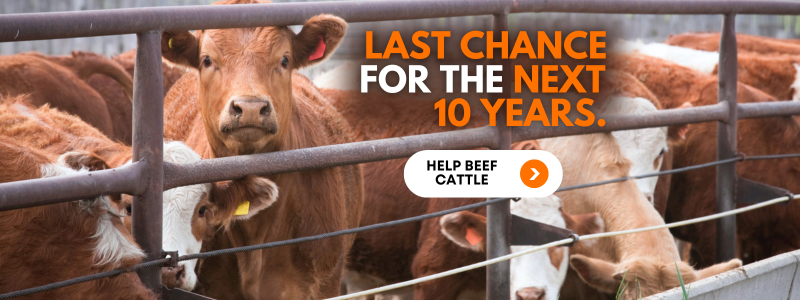
The public comment period for NFACC’s Draft 2025 Beef Cattle Code of Practice is closing on June 12th. This 60-day window is the only opportunity for members of the public to influence the final standards before the Code is published and remains in place for another 10 years.
The Beef Code sets standards for the care and handling of cattle used for meat production at the farm level and is referenced in legislation in some provinces. In Canada, cattle used for meat production can be found on seedstock and cow-calf farms, in backgrounding and feedlot operations, at sale yards or auction sites, and at assembly stations.
Public input is essential to ensuring the final Code reflects both scientific evidence and societal expectations. All comments submitted through NFACC’s public survey will be reviewed and shared with the Code Development Committee before the Code is finalized.
As a founding member of NFACC and one of only two animal welfare organizations at the table, Humane Canada will submit formal comments informed by science and member input, and we strongly encourage members to participate as well.
We encourage members to focus their comments on the following areas, where welfare protections remain weak or non-binding: overhead protection from extreme weather, especially at feedlots; enforceable stocking densities; elimination of painful procedures (e.g., branding, dehorning); and a transition to gradual weaning. We also encourage you to speak up about the lack of welfare requirements and recommendations to protect animals at auction sites, which this code has not addressed.
How to participate:
Submit comments directly to NFACC: All unique comments submitted through NFACC will be reviewed, summarized, and shared with the Code Committee before the Code is finalized.
Amplify the message: Please encourage your followers and supporters to participate in the public comment period
Important: Please remember that comments must be original and written in your own words. When encouraging your supporters to participate, emphasize that unique submissions are most effective. All comments should be respectful, as inappropriate or derogatory language may result in submissions not being considered.
Codes are updated only once every ten years. This is a critical moment for cattle welfare in Canada. Remember, the Public Comment Period closes on June 12th